
Consulting Division
Our Mission
Founded in Winter 2026, IBEC’s consulting division aims to provide members with hands-on experience in consulting. We address our clients’ challenges through in-depth research and data-driven solutions for implementation.

Project Highlight:
Winter 2026 Internal Gap Analysis
-
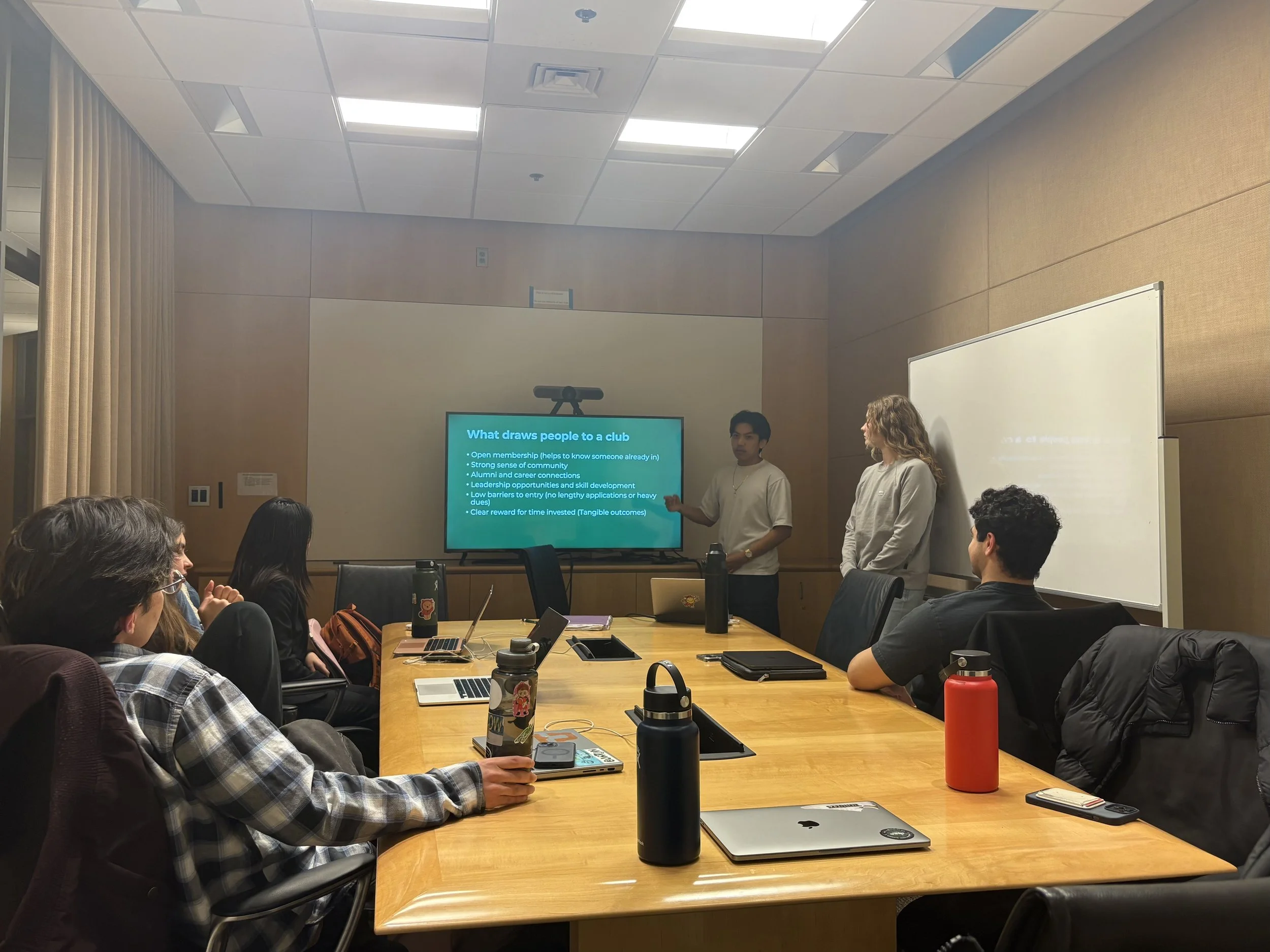
The engagement began with intentional consultant training and project architecture. The division was led by a Project Manager responsible for educating consultants, facilitating weekly meetings, and assigning structured action items.
Each consultant was assigned unique research responsibilities designed to build subject-matter expertise in a specific area of IBEC’s operations. The objective was to create a room of specialists rather than generalists to ensure depth of analysis across multiple organizational dimensions.
During this stage, consultants were trained in:
Problem-framing and structured thinking frameworks
Stakeholder and “market” analysis within student organizations
Hypothesis-driven research methods
Translating ambiguity into actionable questions
Weekly meetings functioned as working sessions where consultants presented findings, challenged assumptions, and refined direction. This helped us establish accountability, intellectual rigor, and collaborative synthesis early in the process.
-
After building analytical foundations, the team conducted a structured benchmarking analysis of high-performing organizations, university departments, and peer clubs.
Consultants examined best practices in:
Successful engagement strategies
Event formats and programming structures
Communication systems
Recruitment and retention tactics
Leadership development models
The team evaluated the feasibility of IBEC adopting or adapting similar initiatives based on:
Organizational capacity
Alignment with mission
Resource constraints
Cultural fit
This stage allowed the division to identify preliminary gaps between IBEC’s current operations and “desired state” organizations and university departments.
-
To move beyond assumptions, the team transitioned into primary research.
Consultants were trained in:
Survey design and bias reduction
Data consolidation and pattern identification
Extracting meaningful insights from quantitative and qualitative data
Contextualizing raw responses into strategic implications
The team split into two focused research sectors:
Member Experience Team: Focused on understanding current members’ satisfaction, engagement levels, motivations, and unmet needs.
Non-Member Insights Team: Focused on understanding awareness, perception, barriers to entry, and alternative club choices among non-members.
Each sector:
Designed and distributed targeted surveys
Conducted structured focus groups to add qualitative depth
Identified key demographic segments
Mapped wants, pain points, and decision drivers
Findings were synthesized into themes rather than presented as raw data. Consultants identified the core drivers shaping member experience and clarified where IBEC’s offerings diverged from stakeholder expectations.
-
With validated insights in place, consultants transitioned from analysis to solution design.
Each consultant developed and pitched strategic initiatives aimed at directly addressing identified gaps. Proposals were expected to move beyond conceptual ideas and include operational viability.
Implementation plans included:
Initiative purpose and strategic rationale
Detailed launch structure
Timeline and sequencing
Role delegation and accountability mapping
Resource requirements
Risk considerations
Defined KPIs and measurable success metrics
Feedback loops for iteration and improvement
Following presentations, consultants engaged in structured discussion and evaluation to determine which initiatives most effectively addressed IBEC’s core issues. Through consensus-building, the team selected a focused set of high-impact implementations.
Once selected, consultants expanded and refined these initiatives into fully developed operational strategies designed for seamless integration into IBEC’s existing structure.
-
The project concluded with a formal strategy presentation delivered to the IBEC Executive Leadership Board. The presentation included:
Key Research Insights
A synthesis of member and non-member findings, including:
Core demographic segments
Motivations and decision drivers
Engagement barriers
Perception gaps
Identified internal inefficiencies
Selected Strategic Initiatives
A focused portfolio of research-backed solutions aligned with IBEC’s mission and long-term growth objectives.
Fully Developed Implementation Plans
Each initiative was supported by:
Clear rollout roadmap
Operational integration steps
Defined leadership ownership
Measurable performance indicators
Measurement & Feedback Framework
Consultants established systems to track:
Member engagement and retention
Event participation trends
Satisfaction improvements
Recruitment growth
Long-term sustainability
The engagement resulted in a structured roadmap that allowed Leadership to move confidently from analysis to action. Rather than providing recommendations alone, the division delivered executable strategies designed for immediate implementation and continuous refinement.
The Benefits
The IBEC Consulting Division provides hands on experience in the essentials of the consulting industry and project engagement. Members do more than learn frameworks. They apply them to real organizational challenges, conduct research, develop strategic recommendations, and present to executive leadership.
By the end of the project, consultants walk away with tangible, resume-ready experience that demonstrates analytical thinking, initiative, and the ability to solve complex problems.
This experience is valuable for students pursuing careers in:
Consulting
Marketing and Brand Strategy
Finance and Analytics
Entrepreneurship
Corporate Strategy and Operations
In today’s competitive job market, employers look for evidence of critical thinking, structured problem solving, and the ability to turn data into action. The Consulting Division is designed to build exactly those skills.
Skills Developed
Market Research
Designing surveys, conducting focus groups, benchmarking peer organizations, and identifying target audience needs.
Data Analysis
Consolidating raw data, identifying patterns, and translating findings into clear strategic insights.
Business Frameworks such as SWOT, PESTEL, and Competitive Analysis
Applying structured frameworks to evaluate organizational challenges and opportunities.
Survey Construction and Research Design
Learning how to design effective research instruments that generate reliable insights.
Critical Thinking and Problem Structuring
Breaking down complex issues, testing assumptions, and building logical recommendations supported by evidence.
Professional Communication
Presenting findings to peers and executive leadership with clarity and confidence.
By the end of the term, members have contributed to a full cycle consulting engagement from research through implementation planning, gaining practical experience that prepares them for high impact professional environments.
How to Apply
Our application process starts week 8 of the prior term. Applications require a resume and answering a couple supplemental questions.
Decisions are typically made during the break in between terms, with accepted consultants being informed and contacted over said break. Our meetings start during week 1 of the term and run throughout, with final deliverables being presented typically during week 10.
If you are interested in becoming a consultant, keep a look out for the application towards the end of the term by attending the weekly IBEC meetings and staying up to date on the MS Teams page and Instagram page.